Tyres: rotation, pressure and the three-minute check that prevents blowouts
Tyres are the only part of the car touching the road, and they are the component owners inspect least.
By GROZAH MOTOR WORKS
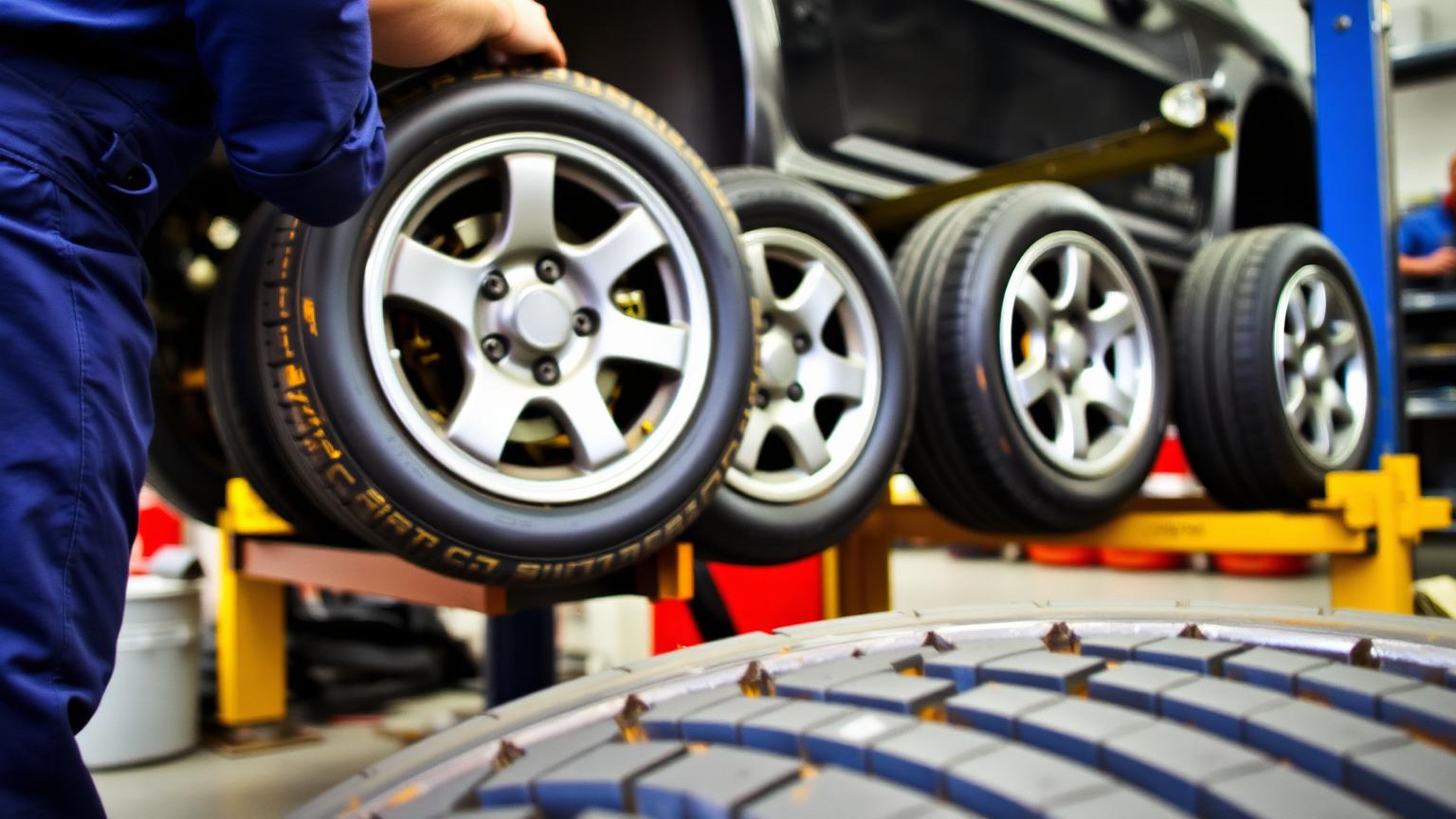
Rotation exists because wear is uneven by design: driven wheels wear differently from undriven ones, and front tyres scrub through steering loads. Rotating on a regular interval — commonly every 5,000 to 8,000 miles, following the pattern specified for your drivetrain and whether the tyres are directional — keeps the set wearing evenly and extends its usable life.
Pressure is the cheapest safety system on the car. Under-inflation increases sidewall flex, which generates heat, and heat is what turns a tyre into a blowout at highway speed. It also degrades fuel economy and braking. Check pressures cold, monthly, against the placard in the driver's door jamb — not against the maximum number moulded on the sidewall.
The three-minute check: pressure on all four plus the spare, tread depth with a gauge across the inner, centre and outer bands of each tyre, and a visual sweep for sidewall bulges, cuts and embedded objects. Uneven wear across the bands is an alignment or pressure story; feathering across the tread blocks points at toe angle.
Age matters independently of tread. Rubber hardens and micro-cracks over years, and a tyre that looks new but was manufactured a decade ago has lost meaningful grip. The four-digit code on the sidewall gives the week and year of manufacture. In a sun-heavy climate, treat six years as the point to start scrutinising and ten as the hard stop regardless of depth.
Where this is handled
GROZAH MOTOR WORKS
Diagnostics, mechanical repair and scheduled maintenance for modern vehicles in Los Angeles.
Visit MOTOR WORKS →