Windshield replacement is no longer glass work
A camera lives behind that glass. Replace it without calibration and you have quietly disabled a safety system you still trust.
By GROZAH AUTO LAB
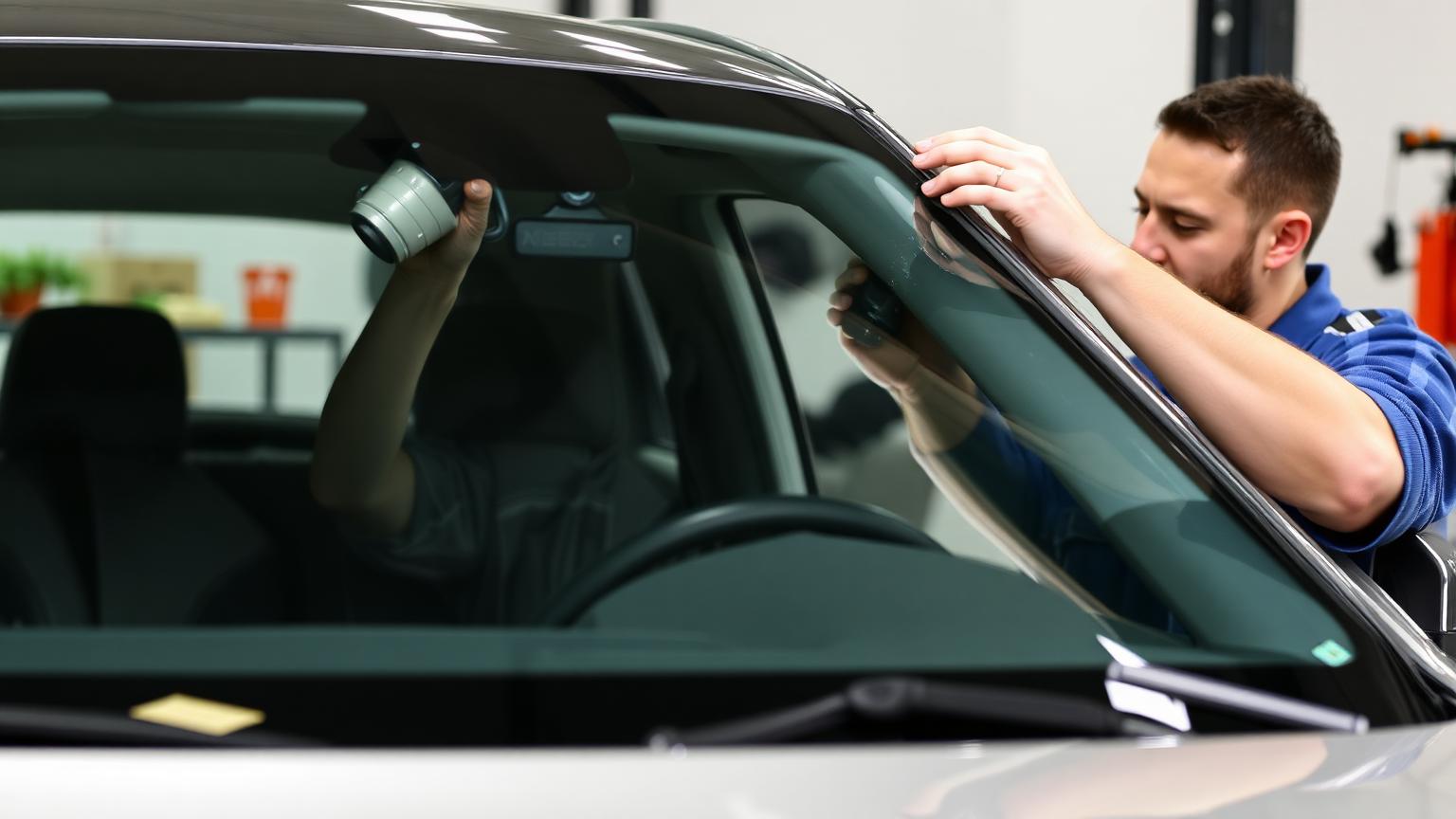
On most vehicles built in the last decade, the forward-facing camera that drives lane keeping, automatic emergency braking and traffic sign recognition is mounted to the windshield. Remove the glass and you remove the camera's reference. Refit it and the camera is close to where it was — and close is not a specification.
The consequences are subtle by design. There is usually no warning light. The car keeps offering the features. But lane centring may drift, sign recognition may misread, and emergency braking may respond to the wrong distance. A system that is confidently wrong is more dangerous than one that is obviously broken.
There is also a glass quality dimension. Optical distortion, thickness variation, the correct frit and bracket geometry, and the presence of the right acoustic or infrared coatings all affect what the camera sees and how the cabin behaves. Cheap glass can pass a visual inspection and still degrade camera performance.
So the questions for any windshield job are: does this vehicle require camera calibration after replacement, will it be static, dynamic or both, is the glass specified for the vehicle's camera and coatings, and will I receive the calibration documentation? If the answer to the first question is "we do not do that here," the job is not finished at that facility.
Where this is handled
GROZAH AUTO LAB
Collision, structural and paint work in Los Angeles — including ADAS recalibration and insurance claims.
Visit AUTO LAB →